Why do some stories stay with us?
And why do some pieces of writing make us slow down and think long after we’ve finished reading them?
We often talk about “engagement” as if it were one thing.
A like.
A comment.
A share.
A click.
But engagement isn’t really one thing.
Different kinds of content ask different things from us.
Some ask for a second.
Some ask for a few minutes.
Some ask us to think.
That suggests a simple framework:
Attention. Connection. Contemplation.
Attention: The Power of the Short Observation

Consider this:
An AI data center is basically a rack full of computers.
It’s almost too simple.
Yet that’s precisely why it works.
You don’t need a technical background to understand it. You don’t need to read an explanation. The statement takes something that sounds enormous and complicated—an AI data center—and reduces it to something familiar.
You see it.
You understand it.
And perhaps you think:
“I never thought about it that way.”
That’s the power of a short observation.
It doesn’t try to teach everything.
It simply changes the way you see something.
Short observations are useful because they respect the reader’s time. They create a small interruption in the endless stream of information.
They don’t necessarily need to provide the complete answer.
Sometimes their job is simply to make us stop long enough to ask another question.
Attention is the doorway.
Connection: The Power of a Story
Now consider a completely different kind of content.
Imagine sitting in a customer meeting.
The presentation is going well on paper, but something feels wrong. The customer isn’t objecting, but they aren’t engaged either.
Then, during lunch, the conversation unexpectedly turns to music.
You discover that you both love the same guitarist.
The conversation changes.
You talk about concerts, albums and guitars.
Later, the customer tells you what they really thought about the presentation.
The problem becomes clear.
The product wasn’t wrong.
The conversation was.
That story does something a short observation cannot.
It gives the idea a human face.
You don’t simply understand the lesson.
You experience it alongside the people in the story.
That’s the power of connection.
Stories allow abstract ideas—listening, trust, misunderstanding, discovery—to become something we can recognize in our own lives.
Connection makes an idea personal.
Contemplation: The Power of Deep Writing
Then there is another kind of writing.
The kind that doesn’t care whether the reader understands it in ten seconds.
A deeper article might begin with something as ordinary as a college textbook.
Years ago, students bought their textbooks.
They could underline them, write in the margins, keep them, lend them, or sell them when the course ended.
Today, many students subscribe to digital textbooks.
The economics and convenience may make sense.
But it raises a larger question:
What happens when we stop buying things and start renting access to them?
That question can lead somewhere much deeper.
From textbooks to software subscriptions.
From software to SaaS.
From SaaS to cloud storage.
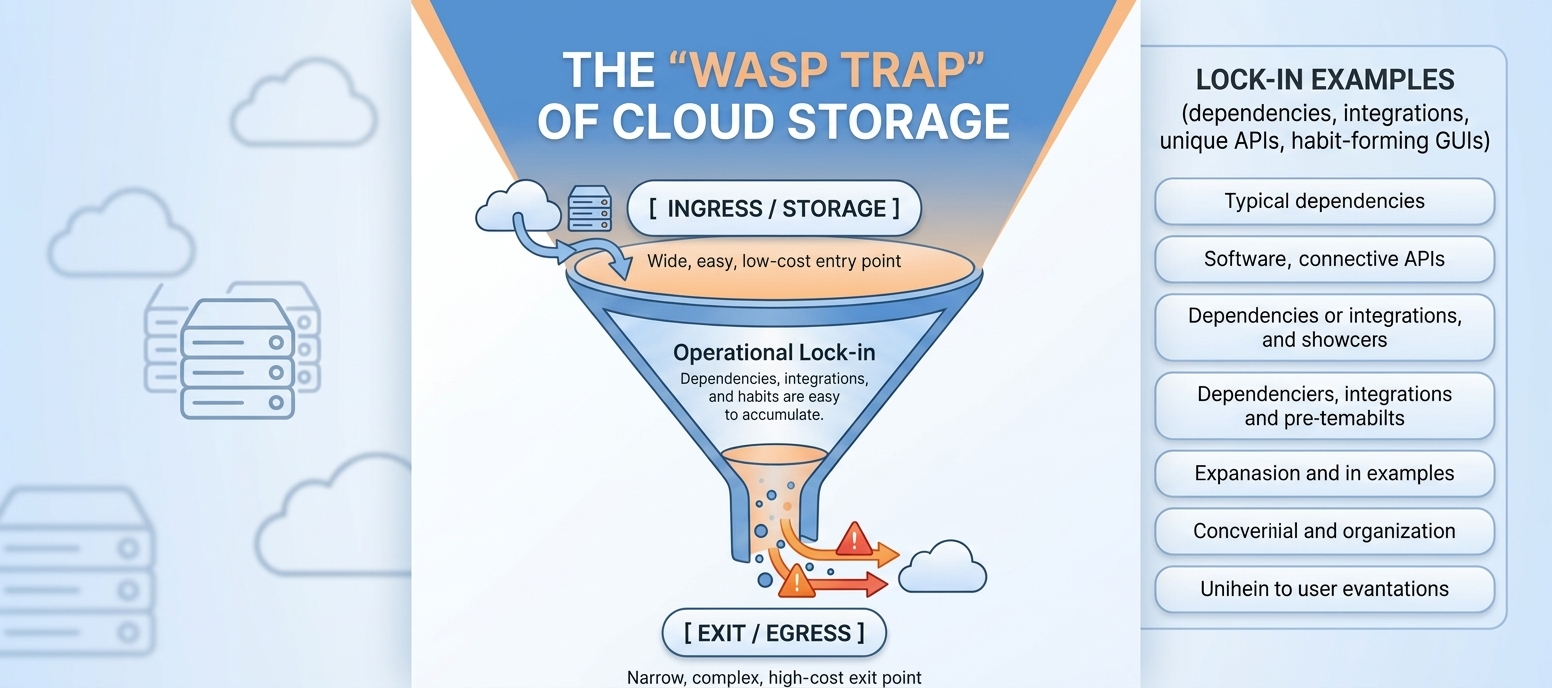
From cloud storage to data portability and vendor lock-in.
The point isn’t that subscriptions are bad.
The point is that convenience can sometimes hide a different kind of cost:
the cost of leaving.
That’s not a thought that needs 20 seconds.
It deserves time.
It requires context.
It benefits from an argument.
That’s where deep writing has its place.
Contemplation gives an idea room to breathe.
The Three Aren’t Competing

This is where the mistake often happens.
We compare a short observation with a long essay and ask which one is better.
That’s the wrong question.
They are doing different jobs.
A short observation might make someone stop scrolling.
A story might make someone remember.
A deep article might change how someone thinks.
And the measures of success are different.
The short observation may receive thousands of reactions.
The story may receive fewer reactions but be remembered months later.
The deep article may receive almost no visible engagement at all—and still be the most valuable piece of writing because someone spent an hour thinking differently about a subject.
Engagement isn’t always visible.
A Different Way to Think About Content
Perhaps content shouldn’t be designed around one question:
“How do I get people to engage?”
Maybe the better question is:
“What do I want this piece to do?”
If the goal is to interrupt someone’s attention:
Use an observation.
If the goal is to create empathy or make an idea memorable:
Tell a story.
If the goal is to explore something complicated, challenge an assumption, or develop an idea:
Write deeply.
The strongest content strategy may not be choosing one.
It may be knowing when each one is appropriate.
Attention.
Make me stop.
Connection.
Make me care.
Contemplation.
Give me something worth thinking about.
Not everything needs to do all three.
And not everything needs to be measured by a number next to a heart.
Sometimes the most valuable thing a piece of writing can do is much quieter:
It changes the way someone sees something.

Sami Joueidi holds a Master’s degree in Electrical Engineering and brings over 15 years of experience leading AI-driven transformations across startups and enterprises. A seasoned technology leader, Sami has led customer adoption programs, cross-functional engineering teams, and go-to-market strategies that deliver real business impact.
He’s passionate about turning complex ideas into practical solutions, and about helping teams bridge the gap between innovation and execution. Whether architecting scalable systems or demystifying AI concepts, Sami brings a blend of strategic thinking and hands-on problem-solving to every challenge. © Sami Joueidi and www.cafesami.com, 2025. Feel free to share excerpts with proper credit and a link back to the original post.